
Ceramic Coatings
Long-term paint protection that adds gloss, slickness, UV resistance, and easier maintenance for Sacramento daily drivers.
Ceramic Coatings
Ceramic coating is the most oversold service in the detailing industry. You've probably seen ads claiming it makes your car scratch-proof, permanent, impervious to damage, or bulletproof against rock chips. None of that is true. What ceramic coating actually does is useful, significant, and worth the money for the right owner — but only if you understand what you're actually buying.
How Ceramic Coating Works: The Science of Hydrophobic Paint Protection
When a ceramic coating is applied to a clean, decontaminated, and polished paint surface, the active compounds in the liquid — typically SiO2 nanoparticles suspended in a carrier solvent — begin reacting with the hydroxyl groups present on the clear coat's surface. As the solvent evaporates during the flash and cure stages, those nanoparticles cross-link and form a matrix that bonds at the molecular level rather than sitting on top like a wax film.
The resulting hardness is measured on the pencil hardness scale, typically 9H for professional-grade products. That hardness is what gives the coating its chemical resistance and its ability to absorb minor environmental contact without degrading. It is not, however, hard enough to stop a rock traveling at highway speed or a car wash brush dragging across the surface — both of those exceed the coating's impact and abrasion threshold.
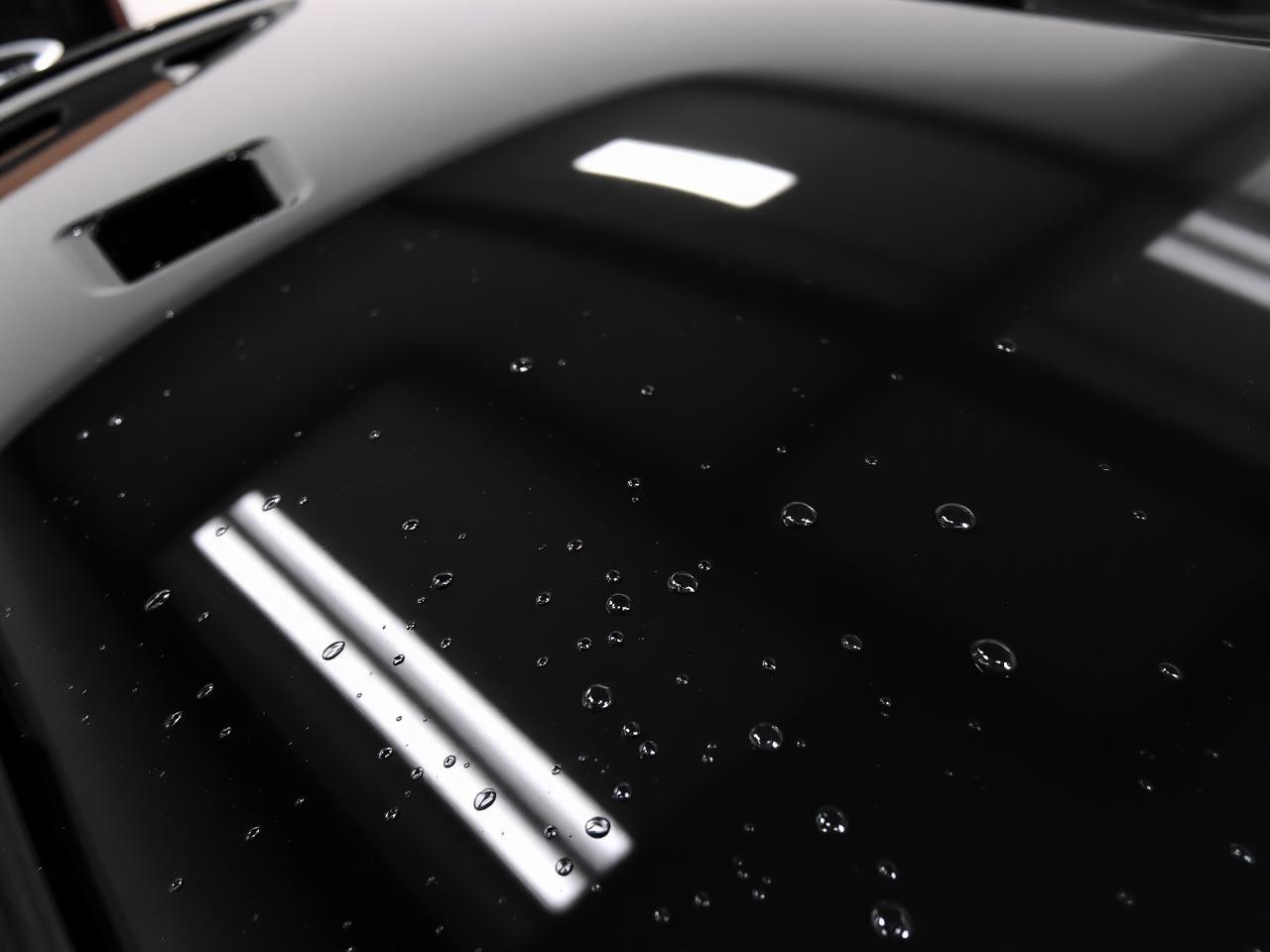
The hydrophobic behavior works because the cured coating surface has extremely low surface energy. Water molecules are more attracted to each other than to the coating, so they bead and roll rather than spreading and sheeting. That same low-energy surface is why contamination like pollen, dust, and light road film releases so easily during a wash — nothing wants to stick to it.
Professional-grade automotive ceramic coatings used by trained installers differ from consumer spray-on ceramic products primarily in SiO2 concentration, layering capability, and cure requirements. Professional products often require 24–48 hours of controlled cure time before the vehicle can get wet, while consumer sprays sacrifice longevity for ease of application. The difference in real-world durability is significant.
We come to your home, workplace, apartment lot, or wherever the vehicle is parked, so your car gets handled without rearranging your day.
Book NowCeramic Coating vs. Wax vs. Paint Sealant vs. PPF
These four products protect your paint in fundamentally different ways, at different price points, for different durations. Here is the honest comparison:
Carnauba Wax — A natural wax that sits on top of the clear coat and fills minor surface imperfections optically. Provides a warm, organic gloss. Lasts 6–8 weeks in normal use, often less in summer heat. Offers minimal UV and chemical resistance. Best for show cars that are washed by hand and garaged, or for owners who enjoy regular maintenance as a ritual rather than a chore.
Paint Sealant — A synthetic polymer that also sits on top of the paint but bonds more aggressively than wax. Lasts 4–6 months. More UV and chemical resistant than carnauba wax. Good middle-ground option for owners who want more durability than wax without the cost and prep requirements of ceramic. The exterior wash services we offer at Drippy Suds can include a spray sealant application as an add-on.
Ceramic Coating — Chemically bonds to the clear coat. Lasts 2–5 years depending on product tier and maintenance. Offers the strongest combination of UV, chemical, and hydrophobic protection available without a physical film. Cannot fill scratches or prevent chips. Requires professional prep and application for durable results.
Paint Protection Film (PPF) — A thick polyurethane film that physically absorbs rock chips, road debris impact, and minor abrasion. The only protection that actually prevents stone chips. Self-healing properties on premium products. Typically applied to high-impact zones (hood, bumper, mirrors) rather than the full vehicle due to cost. Often layered with ceramic coating on top for both impact protection and hydrophobic behavior.
The right choice depends on your vehicle, how it's used, and your budget. If stone chip protection is the priority, start with PPF. If long-term paint preservation and ease of washing are the goal, ceramic coating is the answer. If budget is the deciding factor and you wash regularly, a quality sealant every six months is a reasonable alternative.
Inside the service
Why Sacramento Vehicles Need Ceramic Coating More Than Most
Sacramento and the broader Central Valley create paint degradation conditions that are genuinely harsher than what most of the country deals with.
UV Index and sun exposure. The Sacramento metro averages over 260 sunny days per year. The UV index regularly hits 9–11 in summer — the 'very high' to 'extreme' range. UV radiation is the primary cause of clear coat oxidation, the process that turns paint from glossy to flat, chalky, and faded. On dark-colored vehicles, especially black and deep red, this fading becomes visible within two to three years on unprotected paint. A ceramic coating's UV resistance meaningfully slows this process.
Surface heat cycles. Air temperatures in the 100–115°F range translate to hood surface temperatures past 160°F on dark vehicles. At those temperatures, bird droppings can etch through unprotected clear coat in under 48 hours. Tree sap polymerizes faster on hot paint, becoming far harder to remove safely. Heat cycles also accelerate the breakdown of wax and sealant, which is why protection applied in April is often functionally gone by July.
Hard water and mineral spotting. Sacramento-area tap and sprinkler water carries significant mineral content. When that water evaporates on paint, it leaves calcium and magnesium deposits that etch into the clear coat if left in sun. This is a common cause of permanent water spot damage on unprotected paint. The hydrophobic surface created by ceramic coating causes water to bead and roll before it can evaporate, dramatically reducing the frequency of spot formation.
Valley-specific contaminants. Oak and sycamore sap, agricultural dust, wildfire ash (an increasingly regular fall presence), and March-April pollen are all acidic or abrasive when combined with moisture and heat. Ceramic coating's chemical resistance gives you a real buffer against each of these before they reach the clear coat.
The case for ceramic coating is strong in most climates. In Sacramento, it's a practical decision based on what the environment actually does to paint every year.
The Drippysuds Application Process
Here is what physically happens from the time you book to the time you drive away.
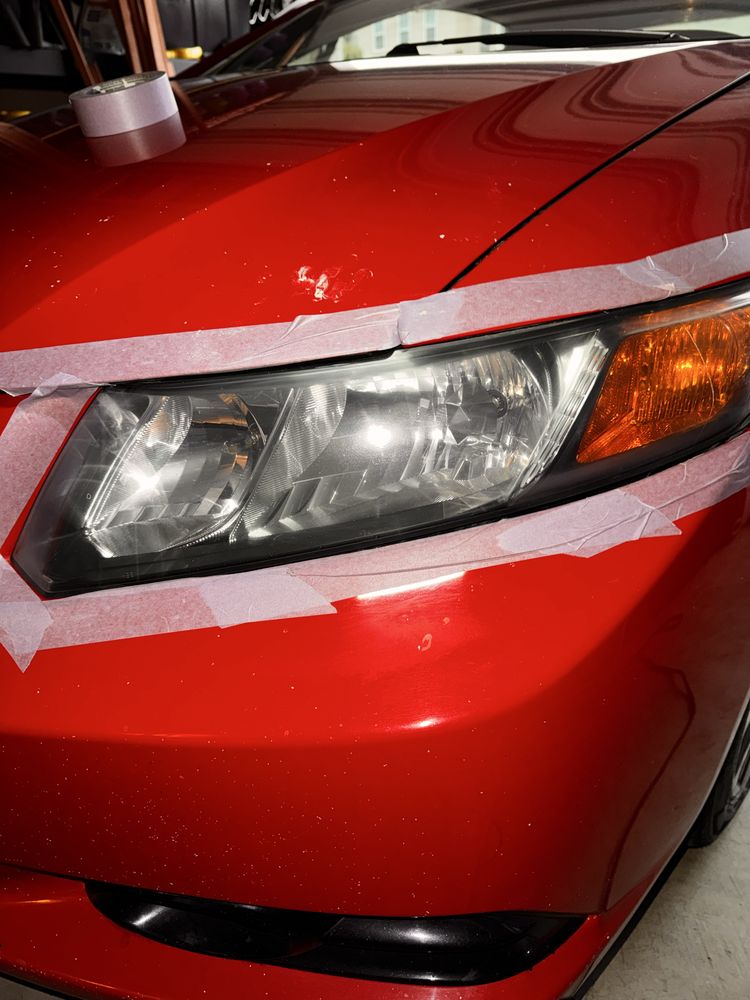
Step 1 — Condition Assessment. Before any work begins, Harvey or a Drippy Suds technician evaluates the paint under proper lighting, checking for existing swirl marks, scratches, water spot etching, oxidation, and any surface contamination. This assessment determines the level of paint correction needed before coating — skipping this step is the most common reason coating jobs fail or look disappointing.
Step 2 — Full Decontamination Wash. The vehicle receives a thorough hand wash using a proper two-bucket method, followed by a chemical iron decontamination spray to dissolve embedded ferrous particles (brake dust, rail dust) that a normal wash cannot remove. This is followed by a clay bar or clay mitt treatment to pull bonded surface contaminants from the clear coat.
Step 3 — Paint Correction (if needed). Any swirl marks, light scratches, or oxidation are addressed via machine polishing before the coating goes down. A coating locked over swirl marks does not hide them — it preserves them permanently under a glossy layer. Correction ensures the surface being coated is actually in the condition you want to protect.
Step 4 — Panel Wipe and IPA Prep. An isopropyl alcohol (IPA) solution is wiped over every panel to remove any polish oils or residue. This is a critical step — even microscopic oil contamination prevents the coating from bonding properly to the clear coat.
Step 5 — Coating Application. The ceramic coating is applied one panel at a time using an applicator pad, then leveled with a microfiber towel before it flashes (partially cures). Each panel is worked systematically to ensure even coverage and eliminate high spots.
Step 6 — Flash and Initial Cure. After application, the vehicle is placed in a covered or shaded environment for initial flash time. Most professional coatings require 24–48 hours before water contact and 7–14 days to reach full hardness. We walk you through exactly what to avoid and for how long before you take the vehicle home.
Because Drippy Suds operates as a mobile service, this entire process comes to your driveway, garage, or covered parking space. You do not need to drop the vehicle off at a shop or arrange alternate transportation for a day.
What to Look for in a Ceramic Coating Installer
The ceramic coating market has a low barrier to entry.
Anyone can buy a consumer-grade product, watch a few videos, and call themselves a certified installer. Here is what to actually evaluate before you book:
Do they discuss prep in detail? A serious installer talks about decontamination, clay bar treatment, and paint correction before they talk about coating brands or product tiers. If the conversation goes straight to coating names and warranties without discussing paint condition, that's a red flag.
Do they assess the vehicle first? Quoting a job without seeing the paint — in person or via detailed photos — is a sign that prep is being approximated or skipped.
Are they transparent about what ceramic coating does not do? Any installer claiming ceramic coating prevents rock chips or scratches is either misinformed or overpromising to close the sale. The honest answer is that it does not.
Can they explain the cure process? A professional installer knows exactly how long the initial flash takes, when the vehicle can get wet, and when it reaches full hardness. If they're vague on cure times, they're vague on the product they're using.
Do they use professional-grade products? Professional ceramic coatings used by trained detailers have higher SiO2 concentrations, longer cure requirements, and real multi-year durability. Consumer spray-on 'ceramic' products from auto parts stores are a different product category with a fraction of the durability.
Harvey at Drippy Suds will walk you through every one of these points before a single panel is touched. The goal is a coating that actually lasts — not a sale.
Ceramic Coating Aftercare: Protecting Your Investment
Ceramic coating does not maintain itself. The habits that follow application determine whether you get the advertised durability window or an early failure.
The first 7–14 days: Avoid water contact for the first 24–48 hours (your installer will give you the specific window based on the product used). For the first two weeks, avoid automated car washes, bird dropping contact, and parking under trees if possible. The coating is still curing to full hardness during this period.
Ongoing wash protocol: Use a pH-neutral or coating-safe car wash soap. Alkaline 'all-purpose cleaners' and dish soap strip the hydrophobic properties over time. Wash the vehicle every 2–4 weeks, or whenever you notice water no longer beading as aggressively — that's usually surface contamination, not coating failure, and it washes off easily.
Avoid automated tunnel washes: The rotating brushes and abrasive cloth of an automatic tunnel wash — like the ones at common Sacramento-area car washes — cause swirl marks that damage the coating over time. A two-bucket hand wash or a touchless automated wash is acceptable, though even touchless washes use aggressive chemicals that degrade the coating faster.
Annual coating maintenance: Many premium coatings benefit from an annual application of a coating-specific topper or booster product. This is a quick spray-on application that refreshes the hydrophobic layer and extends the overall durability window. Drippy Suds offers this as a follow-on service so your investment keeps performing year after year.
Address contamination promptly: Bird droppings and tree sap should be removed as soon as they're noticed. Even on a coated surface, prolonged exposure to acidic contaminants at Sacramento's summer surface temperatures can cause etching. The coating buys you more time than bare paint would — but not unlimited time.
Honest answer
Ceramic Coating ROI: Paint as a Resale Asset
Most buyers think about ceramic coating as an appearance decision. It is also a financial one.
Paint condition is one of the most visible factors in a used vehicle's perceived value. A car with flat, swirl-heavy, oxidized paint signals neglect to a buyer — even if the mechanical condition is excellent. A car with deep, glossy, well-maintained paint signals care and commands a higher price in a private sale and a better trade-in offer at a dealership.
Ceramic coating slows the UV oxidation and surface degradation that degrades paint condition most visibly over time. For a vehicle kept three to five years, the difference between coated and uncoated paint at the time of sale is real and often exceeds the original cost of the coating. That is a straightforward ROI calculation, not a detailing upsell.
The best time to coat a vehicle is immediately after purchase, when the paint is at peak condition and no defects need correction. The second-best time is before another Sacramento summer removes more from the finish. Contact Harvey at Drippy Suds — 916-507-4802 — for an honest assessment of your vehicle's paint and what protection tier makes sense.
Why the Central Valley Is Hard on Paint
Sacramento paint takes a beating that drivers in cooler, cloudier regions just don't deal with. The valley averages over 260 sunny days a year, and UV radiation is the single biggest long-term killer of automotive clear coat. Sun exposure causes oxidation, which is what turns a formerly glossy finish flat, chalky, and faded — especially on red, black, and dark blue paint. A ceramic coating blocks a significant portion of UV before it reaches the clear coat, which meaningfully slows that fading process.
On top of UV, you have summer heat that regularly pushes surface temperatures on a parked car's hood past 160°F. Bird droppings on a 160°F hood can etch through clear coat in under 48 hours. Tree sap from the valley's oaks, sycamores, and pines bonds to hot paint and is a nightmare to remove without damaging the finish underneath. Sprinkler water with the hard mineral content common in this region leaves calcium spots that can etch in permanently if left in the sun. Pollen in March and April gets acidic when it absorbs moisture. Ash from fire season settles into every seam.
Ceramic coating doesn't make any of that go away. What it does is buy you time — in many cases, enough of a window to wash off contaminants before they damage the paint, where an uncoated car might already be etched by the time you notice.
Ceramic Coating Across the Sacramento Metro
We apply ceramic coatings across the whole Sacramento metro, not just the city core. The exact same prep and application process runs whether the car is parked in a downtown Sacramento garage, an Elk Grove driveway, a Fair Oaks ranch property near the American River, a Rancho Cordova commuter's carport, or a Folsom street shaded by mature trees. Drivers around the reservoir and historic district can read our dedicated ceramic coating in Folsom breakdown for the local paint stressors there. Because we're fully mobile, the coating gets applied and cured where the vehicle already lives.
The reason coating value shifts a little from one part of the metro to the next comes down to what each area actually does to paint:
Fair Oaks: the equestrian and ranch properties near the American River deal with hard well water. Sprinkler and wash water there carries heavy mineral content, and those calcium and magnesium deposits etch into clear coat if they dry in the sun. The hydrophobic surface a coating creates is directly aimed at that problem, so water beads and rolls off before it can evaporate and spot.
Rancho Cordova: drivers on the freeway commute corridor pick up agricultural-edge dust and brake-and-rail grime that grinds into unprotected paint during washing. On a coated surface, that contamination releases far more easily and does less damage on the way off.
Citrus Heights: streets near the light-rail stops collect rail dust and brake dust, and the mature tree-lined blocks add tree sap to the mix. Both are the kind of contaminant a coating's chemical resistance buys you time against.
North Highlands, Carmichael, West Sacramento, and Arden-Arcade all sit in the same valley-climate envelope: 260-plus sunny days, summer UV in the 9-to-11 range, and surface temperatures past 160°F on dark hoods. That UV and heat load is the core case for coating anywhere in this region, and it doesn't ease up in the surrounding suburbs.
Coating Durability Is the Same Across the Metro
None of that local variation changes the honest durability answer. A professional coating in this metro still runs 2 to 5 years depending on the tier, the application quality, and how the car is maintained.
It still won't stop rock chips, won't prevent scratches from a bad wash, and won't let you skip washing the car. What it does is buy you a real window against the specific things Sacramento-area conditions throw at paint. If you want to see how this reads for your own neighborhood, the city pages below cover the local conditions street by street. Call 916-507-4802 or book a Ceramic Coatings appointment online and we'll assess your paint first.
How it works
Service Area and Mobile Application
Drippy Suds applies professional ceramic coatings across Sacramento, Elk Grove, Folsom, Roseville, and surrounding areas. The service is mobile, which is uncommon for ceramic coating, since most shops require overnight drop-off. Harvey and the Drippy Suds team bring the prep equipment, coating products, and proper lighting to your driveway, garage, or covered parking space. You keep your schedule. We bring the shop to you.
If you want the finish actually protected instead of just cleaned, call 916-507-4802 or book a Ceramic Coatings appointment online. We'll start with an honest conversation about your vehicle's paint condition, recommend the right coating tier, and give you a transparent quote before any work begins.
Frequently Asked Questions
- What Is Ceramic Coating?
- Automotive ceramic coating — sometimes called ceramic car coating or ceramic paint protection — is a liquid polymer, most often silica dioxide (SiO2) or titanium dioxide (TiO2) based, that is wiped onto the vehicle's paint surface and then cured. As it cures, it cross-links with the clear coat at a molecular level, forming a rigid, semi-permanent bond that is not removed by normal washing or rainfall the way wax and sealants are. The result is a protective layer that sits on top of your clear coat and does four things measurably well: 1. Hydrophobic water behavior. Water beads into tight spheres and sheets off the surface, taking road grime and light contamination with it. The paint is dramatically easier to wash and dries with far fewer water spots. 2. UV resistance. The coating absorbs and reflects a meaningful portion of ultraviolet radiation before it reaches the clear coat. This slows oxidation — the process that turns a glossy finish chalky and faded — especially on darker colors. 3. Chemical resistance. Bird droppings, tree sap, bug residue, and road tar are acidic or caustic. A coated surface gives you a wider window to remove those contaminants before they chemically etch through the paint. 4. Depth of gloss. A properly applied ceramic coating adds a wet, candy-like reflective depth to paint that wax and sealant cannot replicate. It does not fill scratches or correct paint defects — those must be addressed in prep — but on corrected paint, the gloss level is noticeably different. What ceramic coating does not do: prevent rock chips, prevent scratches from improper washing, or eliminate the need to maintain the vehicle. Any installer who claims otherwise is selling you something.
- How Long Does Ceramic Coating Last?
- The honest answer depends on three variables: product tier, application quality, and maintenance. Here is the realistic breakdown: Entry-level professional coatings (1–2 years): Good for lease vehicles, daily drivers where budget is a constraint, or owners who want to test the benefits of ceramic protection before committing to a higher-tier product. Still outperforms any wax or sealant on durability. Mid-tier professional coatings (2–4 years): The right choice for most daily drivers in the Sacramento area. Strong hydrophobic behavior, reliable UV resistance, and durable gloss that holds up through the valley's summer heat cycles. Premium multi-layer coatings (5+ years): Best for garaged vehicles, low-mileage enthusiast cars, or owners who plan to keep the vehicle long-term and want genuine long-term paint preservation. These products often involve multiple coating layers applied in sequence, with a longer total application time. The numbers above assume proper prep and proper maintenance. A 5-year coating applied over contaminated paint, or maintained with alkaline wash products that strip hydrophobics, will fail well before the advertised durability window. This is why the application and prep process matters more than the product name on the bottle. What 'lifetime warranty' actually means: Some installers and franchise brands advertise lifetime warranties on ceramic coatings. In practice, these warranties typically require annual inspection appointments, specific approved maintenance products, and documented wash history. Missing any requirement typically voids coverage. Read the actual warranty terms before the phrase influences your buying decision.
- What Factors Affect Ceramic Coating Cost?
- No honest installer quotes a flat number without seeing the vehicle. If you want the bigger picture first, our breakdown of what a detailing job costs across every service walks through the same variables. Here are the ones that specifically determine what a ceramic coating job costs: Vehicle size. A compact sedan requires significantly less product and labor time than a full-size SUV or truck. Surface area is a direct cost input. Paint condition and correction needed. A vehicle with heavy swirl marks, light scratches, or early oxidation needs paint correction before coating. That correction work — machine polishing, compounding — is labor-intensive and adds cost. Skipping it to save money means coating a flawed surface, which is money poorly spent. Coating tier and number of layers. Entry-level, mid-tier, and premium multi-year coatings have different product costs and application times. Multi-layer premium packages involve multiple application sessions and extended cure time between layers. Prep requirements. A vehicle that's been regularly maintained and washed properly needs less prep work than one that has years of embedded contamination, water spot etching, or surface oxidation. Prep is typically where the most labor hours live. Coverage area. Full vehicle coverage costs more than partial coverage (hood, roof, and trunk lid only, for example). Some owners prioritize the highest-exposure surfaces and coat the rest later. Anyone quoting you a specific number without seeing the vehicle is either cutting corners on prep or lowballing to get the booking. Contact Drippy Suds at 916-507-4802, send photos of your vehicle, or schedule a consultation — we'll give you a real quote based on what your specific vehicle actually needs.
- How long does ceramic coating actually last?
- This is where most of the confusion in the market comes from. The honest breakdown: Entry-level professional coatings — roughly 1 to 2 years of real protection. Good for lease cars, daily drivers on a budget, or anyone testing the waters before committing to a longer-term coating. Mid-tier professional coatings — 2 to 4 years of real protection. The sweet spot for most daily drivers. Strong gloss, reliable hydrophobic behavior, and enough durability to genuinely outlast the alternatives. Multi-year premium coatings — 5+ years with proper maintenance. Best for garaged vehicles, enthusiast cars, and owners who plan to keep the vehicle long-term. The catch nobody advertises: those durability numbers assume proper application, proper prep, and proper maintenance. A coating that's advertised as 5-year can fail in 18 months if it was applied over contaminated paint, rushed, or skipped steps during prep. This is why prep work is roughly half the job and half the reason professional coatings cost what they cost.
- How much does ceramic coating cost in Sacramento?
- Professional ceramic coating pricing varies significantly based on vehicle size, paint condition, the tier of coating being applied, and how much prep work the paint needs. An entry-level coating on a small car with paint in good condition sits at the lower end. A premium multi-year coating on a large SUV that needs paint correction first sits at the higher end. Anyone quoting you a flat number without seeing the vehicle is either lowballing to book the appointment or selling a product that skips prep. Send us photos or book a consultation and we'll give you an honest quote.
- Is ceramic coating worth it for you?
- It's worth it if you keep your vehicles more than two years, if you care about long-term paint appearance, if the car is parked outside regularly, if you have darker paint that shows swirl marks and fading more easily, or if you're just tired of waxing every few months. It's less worth it for short-term lease vehicles with less than 18 months remaining, for owners who never wash their cars anyway, or for drivers who don't mind a car that slowly goes matte over time. The best time to ceramic coat a car is right after you buy it, when the paint is at its freshest. The second-best time is now, after proper prep, before another summer of Central Valley sun takes more out of the finish.
- What is ceramic coating?
- Ceramic coating is a liquid polymer — typically silica dioxide (SiO2) based — that is applied to a vehicle's paint surface and chemically bonds to the clear coat as it cures. The result is a semi-permanent protective layer that adds hydrophobic water behavior, UV resistance, chemical resistance, and depth of gloss. Unlike wax or sealant, it does not wash off over time — it degrades gradually over years through UV exposure and environmental wear.
- What is the downside of ceramic coating?
- Ceramic coating does not prevent rock chips, does not stop scratches from improper washing, and does not eliminate the need to maintain the vehicle. It requires thorough prep work — decontamination, clay bar treatment, and often paint correction — before application, which adds cost and time. It also has a cure window of 24–48 hours before water contact and 7–14 days to full hardness, during which the vehicle must be protected from rain and contamination. And it is more expensive upfront than wax or sealant.
- How long does ceramic coating last?
- Entry-level professional coatings typically last 1–2 years. Mid-tier professional coatings last 2–4 years. Premium multi-layer coatings can last 5+ years with proper maintenance. Those ranges assume proper prep and maintenance — a coating applied over contaminated paint, or maintained with alkaline wash products, will fail well before the advertised window. 'Lifetime warranty' products typically require documented annual inspections and specific approved maintenance products to keep coverage valid.
- What ceramic coat do professionals use?
- Professional detailers use trade-grade ceramic coating products that are not available at retail auto parts stores. These professional products have higher SiO2 concentrations — often 70–90% versus 5–15% in consumer sprays — require longer cure times to bond properly, and are rated for multi-year durability when applied correctly. Consumer 'ceramic spray' products from retail stores are a fundamentally different product category, despite using similar marketing language. Drippy Suds uses professional-grade coatings selected for durability and performance in Sacramento's specific climate conditions.
- What is the top rated ceramic coating for cars?
- The best ceramic coating for your specific vehicle depends on how you use it, where it's parked, and how long you plan to keep it. Entry-tier professional coatings are appropriate for lease vehicles or budget-conscious daily drivers. Mid-tier coatings are the sweet spot for most Sacramento daily drivers who park outdoors and want 2–4 years of real protection. Premium multi-layer coatings are worth the investment for garaged vehicles, enthusiast cars, or owners keeping the vehicle 5+ years. A professional assessment of the vehicle's paint condition should drive that recommendation — not a brand name.
- Which brand is best for ceramic coating?
- Brand recognition matters far less than application quality and prep work. A well-known franchise brand's coating applied over poorly prepped paint will fail faster than a lesser-known professional product applied over a properly decontaminated and corrected surface. When evaluating installers, ask more about their prep process than about which brand they use — that tells you far more about the quality of the result you'll actually get.
- How much does ceramic coating cost?
- Ceramic coating pricing depends on vehicle size, paint condition, the level of correction needed before coating, and the product tier being applied. An entry-level coating on a small car in good condition sits at one end of the range; a premium multi-layer coating on a large SUV requiring paint correction sits at the other. Any installer quoting a flat number without seeing the vehicle is approximating prep costs — often downward. Contact Drippy Suds at 916-507-4802 for a transparent quote based on your specific vehicle.
- Is ceramic coating worth it in Sacramento?
- For most Sacramento drivers who own their vehicles more than two years and park outdoors regularly, yes. The valley's UV index, summer heat cycles above 100°F, hard mineral water from sprinklers, oak and sycamore sap, and annual wildfire ash create paint degradation conditions that are harsher than most U.S. climates. Ceramic coating's UV resistance, hydrophobic water behavior, and chemical resistance directly address each of those conditions. The cost-per-year comparison against reapplying wax or sealant multiple times annually also favors ceramic for longer ownership windows.
- Does ceramic coating prevent rock chips?
- No. Ceramic coating adds hardness and chemical resistance to the paint surface but does not absorb the impact energy of a rock traveling at highway speed. For rock chip protection, paint protection film (PPF) is the correct product — PPF is a thick polyurethane film that physically absorbs that impact. Many owners apply both: PPF on high-impact zones (hood leading edge, bumper, mirrors) and ceramic coating over the full vehicle for hydrophobic and UV protection.
- Are mobile car detailing services worth it?
- Yes — particularly for ceramic coating applications that require controlled conditions and careful prep work. Mobile detailing brings the service to your driveway or garage, eliminating the need to arrange drop-off transportation or take time off to retrieve the vehicle. For a service like ceramic coating that involves a 24–48 hour initial cure period, having the work done at home means the vehicle can cure in a covered space you control rather than in a shop parking lot. Drippy Suds operates exclusively as a mobile service across the Sacramento metro.
- Is it legal to wash your car in the driveway in California?
- California law and many local water districts restrict residential car washing during drought emergency periods. Outside of declared drought restrictions, residential car washing in a driveway is generally permitted. Professional mobile detailing typically uses significantly less water than a DIY driveway wash — professional two-bucket methods and pre-soak techniques use a fraction of the water a running garden hose does — which keeps mobile detail services compliant even under moderate water-use restrictions. When in doubt, check with your local water district for current restrictions.
- Do you offer ceramic coating throughout the Sacramento metro?
- Yes. We apply professional ceramic coatings across the full service area: Sacramento, Elk Grove, Rancho Cordova, Natomas, Folsom, Roseville, Citrus Heights, West Sacramento, Carmichael, Fair Oaks, Arden-Arcade, and North Highlands. Because Drippy Suds is fully mobile, the prep and application happen at your driveway, garage, or covered parking wherever the vehicle is parked. The process and coating tiers are identical across every city; what shifts is the local paint stressor (well-water mineral spotting in Fair Oaks, freeway and agricultural dust in Rancho Cordova, rail dust in Citrus Heights), and we account for that during the paint assessment.
- Does ceramic coating last as long in Sacramento's heat?
- A professional ceramic coating still holds its 2-to-5-year durability window in the Sacramento metro, but the valley's UV load and summer surface temperatures past 160°F on dark paint do put more stress on any protection than a mild coastal climate would. The realistic range is the same anywhere: entry-tier coatings around 1 to 2 years, mid-tier 2 to 4 years, and premium multi-layer products 5-plus years with proper maintenance. Prep quality and maintenance matter more to that lifespan than the climate does. A coating applied over contaminated paint fails early regardless of where you live, which is why the assessment and decontamination step is where the durability is actually earned.
We Also Serve
- Ceramic Coatings in Sacramento
- Ceramic paint protection in Folsom
- Ceramic Coatings in Roseville
- Paint protection for Rancho Cordova drivers
- Ceramic coating in Fair Oaks
- Ceramic coating in Citrus Heights
- Ceramic coating in West Sacramento
- Ceramic coating in Carmichael
- Ceramic coating in North Highlands
- Mobile detailing services in Sacramento
- Exterior Wash Only before protection
- Drippy Diamond full detail package
Related Services
Book a Ceramic Coatings appointment and Harvey will assess your paint, recommend the right tier, and give you a transparent quote before any work starts.
Book Now